
Four counts each way, and a steady head
Box breathing is an even 4-4-4-4 rhythm: in, hold, out, hold. It is the technique athletes, first responders and special forces use to steady themselves under pressure, and it works in about a minute. Here is exactly what it is, and when to reach for it.


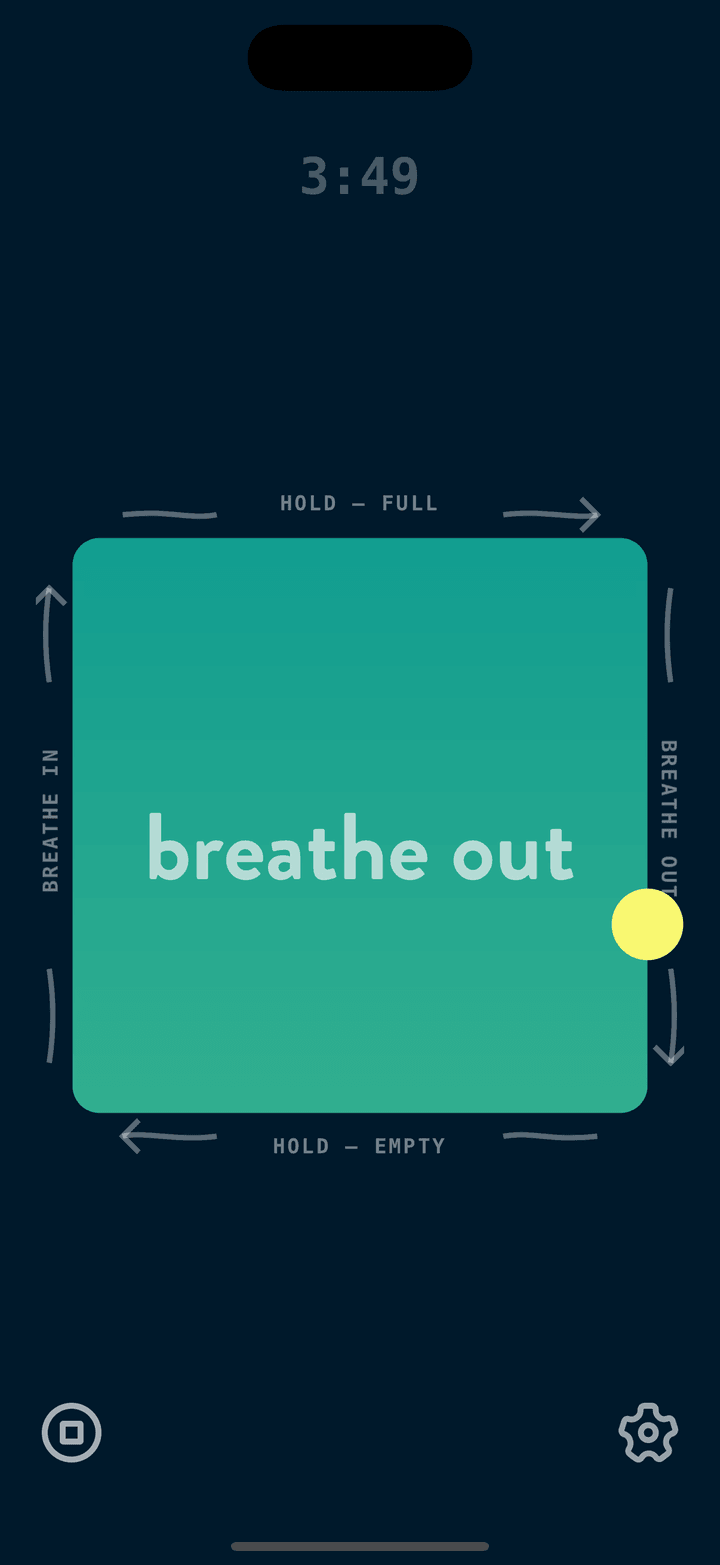
Four equal sides
That is the whole method. Huff counts every side, so you can close your eyes and just follow it.
In for four
Through the nose, smoothly, filling comfortably. Not a gasp and not a maximum: you should be able to hold a conversation at the top of it.
Hold for four
Air in, throat relaxed. Do not clamp down or brace against it. If four feels long, that eases within a couple of cycles.
Out for four
Let it go steadily rather than pushing it out. The exhale should end where a relaxed breath ends, not squeezed empty.
Hold for four
The side everyone forgets. Wait with the air out, stay relaxed, then begin the next breath in. This is what makes it a box rather than a wave.
One cycle is sixteen seconds. Most people feel the difference within five or six of them.
The shape of a cycle
Why it is called a box
Four equal phases, so the trace comes out square. Drawn to real time, and the dot runs it at real speed, so you can breathe along with it right here.
One cycle is sixteen seconds, so a five-minute session is about nineteen of them. Huff paces every one, on screen or out loud.
Reach for it before, not after
Box breathing is a focus tool. It is at its best in the minutes before something that needs your full attention, and it is very good at pulling you back when something has knocked you sideways.
Before deep work
Best useA few cycles at your desk before you start. It clears the noise from whatever you were doing five minutes ago.
Before a hard conversation
Best useOr an interview, a talk, a difficult call. It steadies the voice as much as the head.
Before a big moment
Under pressureAthletes use it on the line and first responders use it on the way in. It is built for exactly this.
When something has rattled you
RecoveryBad news, a near miss, an argument. A few cycles puts you back in the room.
Any time you are wired
AnywhereSitting, standing, in a queue, on a train. It needs no space and nobody can tell you are doing it.
Not for sleep
Use 4-7-8The even rhythm sharpens you. For winding down at bedtime, the long exhale of 4-7-8 does the opposite job better.
You never have to count anything
Huff paces all four sides, so the counting stops being something you do and starts being something you follow. Eyes open for the visual, or eyes closed and follow the sound.
- Every side paced, on screen and in sound
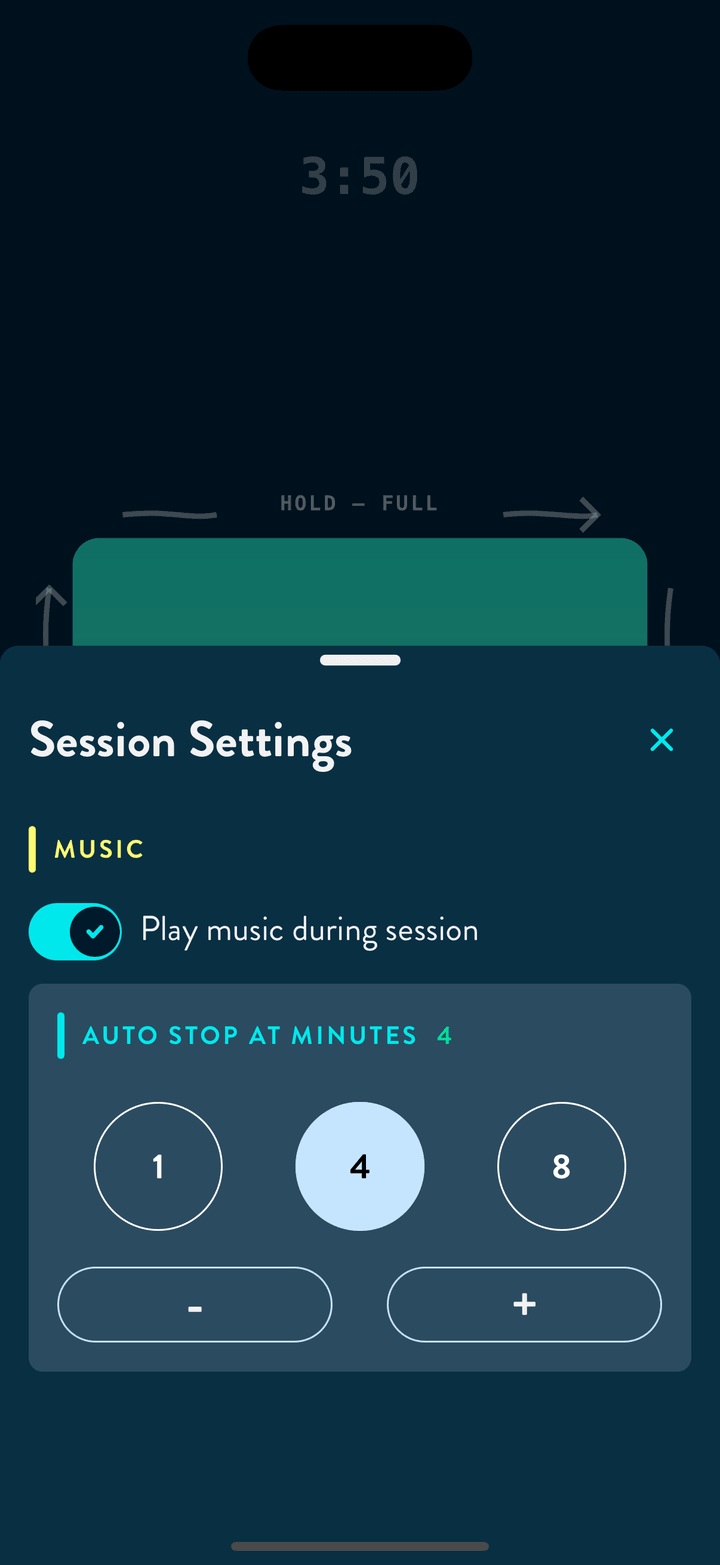
- Set it to stop itself after one, four or eight minutes
- A walkthrough the first time, so nothing is a surprise
- Your sessions saved afterwards, if you want to watch the habit build
Doing it well
Box breathing is gentle. Unlike the deep-breathing techniques, it does not deliberately change your blood chemistry, so there is very little to go wrong. A few things still make it work better.
- Do not force any side. If four counts feels like a strain, shorten all four to three and build up. An even rhythm at three beats a strained one at four.
- Stay relaxed in the holds. Bracing your throat or shoulders turns a calming technique into an effortful one.
- Sit or stand, whatever suits. There is no need to lie down, which is part of why it travels so well.
- Not while driving. Any breathing practice takes attention you should be spending on the road.
If you feel lightheaded, stop and breathe normally: it will pass in a few seconds. If you are pregnant, or have a heart or respiratory condition, check with your doctor before taking up any breathing practice.
The other techniques: for winding down at bedtime, try 4-7-8 breathing. For the deep-breathing-and-hold method, see Wim Breathing.
Try a few cycles now
Huff is free to download and paces the whole thing. Box breathing is there the moment you open it.